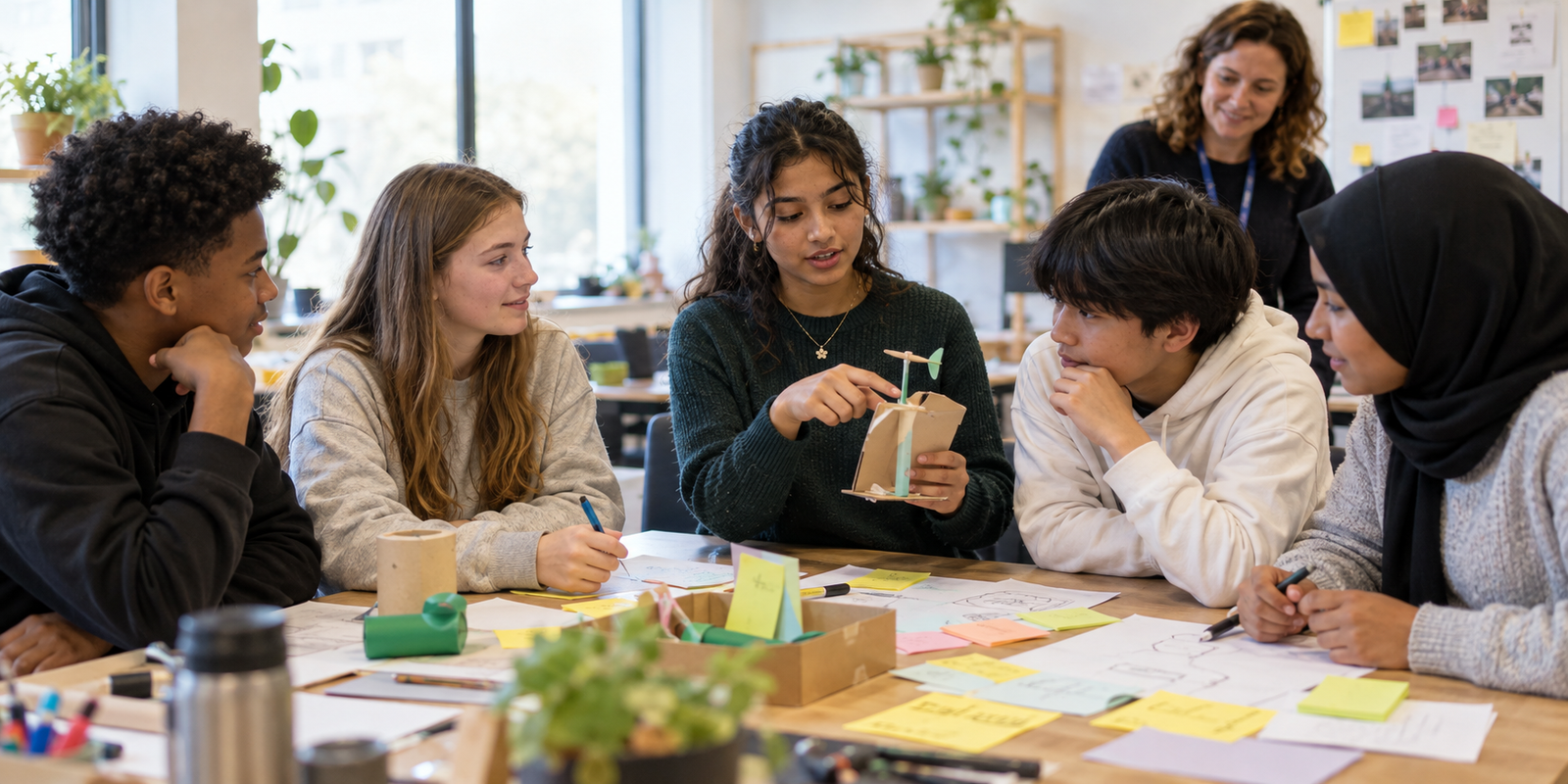
Young people may want a project that helps others feel organised, included or encouraged. That can be a thoughtful enterprise starting point, but “health and wellbeing” also includes areas requiring professional expertise and safeguarding.
Keep an early project in an appropriate everyday setting. A young person can design a useful object or support an adult-led activity without offering treatment, counselling, fitness prescriptions or care.
Begin with ordinary, observable needs
A project might provide a simple planning pad, a clearly labelled activity kit or a welcome card for a supervised club. Ask what practical difficulty the item addresses and whether the intended user actually finds it useful.
Use precise language. “A page to organise next week’s tasks” describes an item. “Reduces anxiety” is a health-related claim that the maker may not be qualified or able to substantiate.
Consider three suitable project formats
An activity organiser. Create a paper planner for a familiar club, based on approved information. Test whether users can find dates, materials and the next step. Keep personal schedules and participant details private.
A creative break kit. Assemble age-appropriate drawing or paper activities for use in a supervised setting. Adults should check materials, product safety, instructions and suitability. Do not market it as therapy or a treatment.
A welcome resource. Help an organisation explain what a new participant can expect. Use clear, accessible wording approved by the responsible staff. The young maker’s role is communication, not managing someone’s support needs.
Keep the boundaries visible
An adult should manage accounts, money, permissions, public contact and any applicable selling responsibilities. Avoid collecting information about health, disability or private family circumstances for a learning project.
Do not ask young people to supervise exercise, offer dietary advice or provide one-to-one emotional support as a business service. If a proposed activity depends on specialist expertise, use an appropriately qualified provider or choose a different project.
Test usefulness honestly
Ask users whether the instructions are clear, the materials fit the task and anything important is missing. Do not treat a positive comment about a planner as proof of a medical or psychological benefit.
Keep the result modest and specific: a resource was easier to understand, a kit was complete or a newcomer could find the meeting point. That provides worthwhile evidence of design and service without overstating what the project does.
For projects delivered with an organisation, our community project ideas offer further ways to contribute within clear adult supervision.