
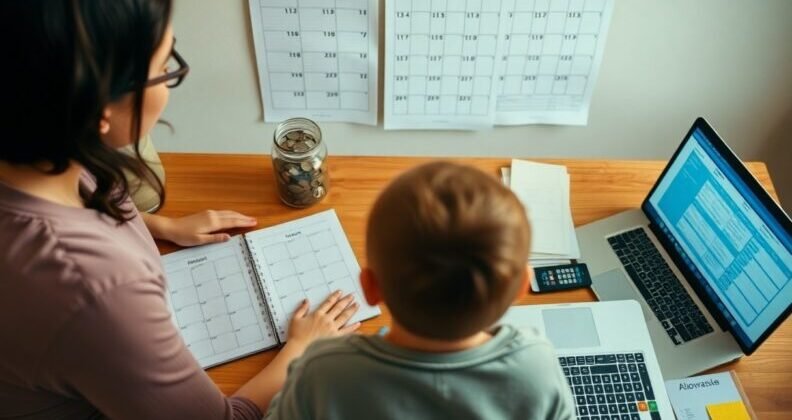
A young person can learn the difference between income and profit using a few imaginary sales. Tax adds a separate question: what must the person responsible for the activity record, report or pay under the rules that apply to them?
This is an introduction for UK families, not an individual tax calculation. A responsible adult should check current HMRC guidance or obtain suitable advice for the actual circumstances.
Keep three numbers separate
Income or revenue is the money received from sales before subtracting costs. Costs are amounts spent in carrying out the activity, though not every payment has the same tax treatment. Profit is the amount left after the relevant costs in the calculation being used.
In a simple learning example, a project receives £80 and records £35 of materials and other project costs. The difference is £45. That does not establish a person’s taxable profit or final tax bill; it shows why “we took £80” and “we made £80” are different statements.
Understand what the trading allowance measures
HMRC’s trading allowance guidance describes an allowance of up to £1,000 a year for eligible trading income. The threshold concerns gross income, before expenses, rather than £1,000 of profit. Exceptions and eligibility conditions apply.
An activity producing £1,200 in receipts and £900 in costs has £300 left in this simplified example, but its gross income is still £1,200. Do not use the lower figure to decide that no reporting check is needed.
The allowance is not a separate exemption for every small project. An adult should consider the person’s relevant activities together and read the current guidance rather than rely on a social-media summary.
Keep records from the beginning
Use a dated record of sales, refunds and expenses, supported by receipts and payment information. Note who actually carries on the activity and who pays or receives money. An adult-owned selling account can create questions that should be clarified before trading.
Do not assume that being under eighteen automatically removes tax responsibilities. Equally, do not tell a child they owe tax merely because a project has received money. Reporting, allowances and tax payable are separate issues.
Use a practical adult checkpoint
Before real sales, review HMRC’s additional income checker and the guidance relevant to the activity. Check again if the project changes or grows. Avoid publishing a fixed personal tax answer in a project plan that may become outdated.
For the young learner, the immediate skill is a reliable record and a clear explanation of the numbers. Adults can handle the formal requirements while helping them understand why honest records matter.