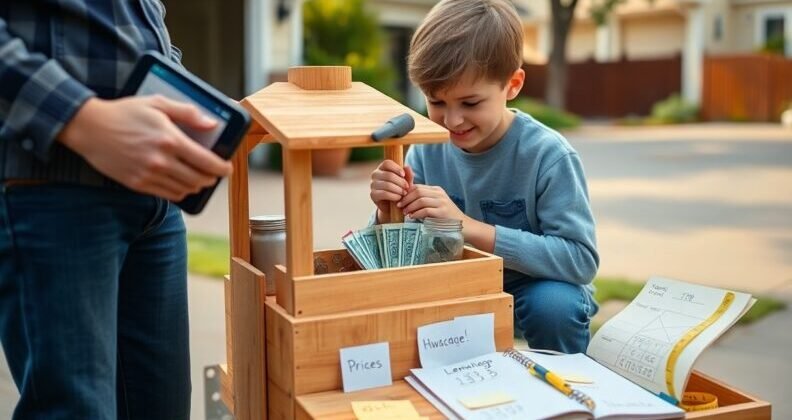

Money learning does not need another full timetable. The seasons already bring useful decisions: planning an outing, repairing something, comparing gifts or making a small project for a community event. A short task can give those decisions a clear learning purpose.
This is a menu of seasonal projects, not a requirement to sell throughout the year. Choose what fits the family, use pretend money where helpful and leave space for rest.
Spring: notice what you already have
Begin with a materials audit. A young person might find paper, ribbon or clean packaging that could become a prototype. Sort it into usable now, needs adult checking and unsuitable. Discuss why “already in the cupboard” does not mean unlimited or free to replace.
Set a tiny making challenge with a fixed supply of materials. Before starting, predict how many items can be made. Afterwards, compare the estimate with the result and count the waste. The money lesson is that resources are limited, so a plan involves choices.
Summer: plan an experience
Give an older child an imaginary budget for a family outing. Include transport, food and an amount kept back for a change of plan. Let them compare two options using information an adult has checked.
If the total is too high, ask what they would adjust and why. Do not make the task a test of whether they can find the cheapest possible day. Accessibility, travel time and what everyone can enjoy also have value.
Autumn: test a small offer
An agreed school or community event can provide a contained project. Make a paper plan before buying stock: who might want the product, what will it cost and how many can realistically be made?
| Decision | Useful question |
|---|---|
| Materials | What must we buy, and what can we safely reuse? |
| Quantity | What happens if only half the items sell? |
| Price | Does each sale contribute towards the costs? |
| Time | What can we complete without rushing schoolwork? |
The event organiser and responsible adult must agree any trading arrangements. A practice stall at home can teach the same calculations without public selling.
Winter: compare value and make room for a pause
Gift season offers a chance to compare an advertised saving with the amount actually paid. Give the young person two fictional offers and ask which suits a particular budget and need. A discount is not a saving if the item was never wanted.
Finish the project before the busiest holiday period. Use a short reflection afterwards: what was worth the money, what would we change and what can wait? Christmas Day does not need a task, sale or lesson attached to it.
Keep a small record across the year
One page per project is enough: our plan, our decision and what happened. A few completed pages can show growing judgement more clearly than a long worksheet pack. Families wanting a fuller structure can use our annual financial education plan alongside whichever seasonal task feels useful now.