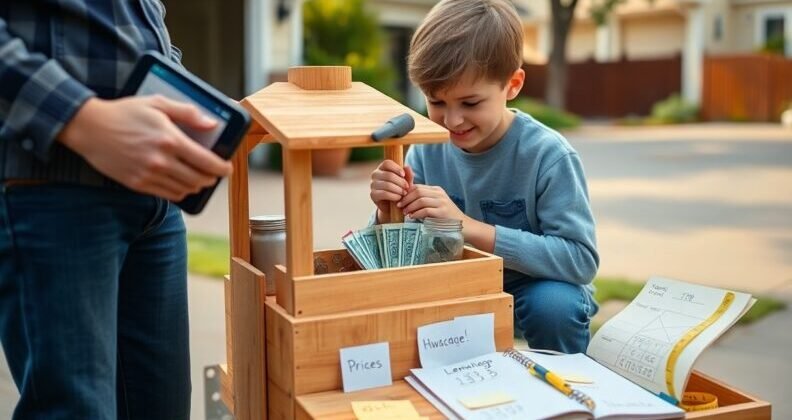

An adult can explain “profit” several times while a child still treats every coin received as money to spend. A simple project makes the distinction visible because materials, sales and remaining money can be counted together.
Begin with a practice version. Five paper bookmarks, a pretend shop and a familiar adult customer are enough to introduce the ideas without financial pressure.
Set up the example together
For this imaginary project, five bookmarks cost £2.50 in materials. The maker plans to sell each for £1. If all five sell, sales revenue is £5. After the £2.50 materials cost, £2.50 remains before any other costs.
Lay out five product cards and use counters for the money. Keep the material cost on a separate card so it does not disappear from the discussion once selling begins.
Ask the learner to predict the result before calculating it. A mistaken estimate gives you a useful starting point for the explanation.
Change one thing
Now suppose only three bookmarks sell. Revenue is £3, while the full batch still cost £2.50. Just 50p remains in cash after that cost, and two bookmarks are unsold. Their materials have not become free simply because nobody bought them.
For an introductory exercise, keep the distinction practical: money received, money paid out and stock still held. Older learners can explore the accounting treatment of stock later with suitable guidance.
Hand the calculation back
Offer two new material options with different prices. Ask the young person to choose one and explain how it changes the plan. If writing is a barrier, let them use coins, drawings or a spoken explanation.
Useful questions include: “What must be paid before we can begin?”, “What happens if nothing sells?” and “Which number have we estimated rather than checked?” Allow thinking time before suggesting an answer.
Move to a real activity only when ready
An adult should agree permissions, manage payments and check any relevant safety or trading requirements. Keep quantities and spending modest. Do not promise a real customer something the young person cannot comfortably deliver.
At the end, compare the plan and the result. Were materials used as expected? Did the price make sense? Was the making time manageable? Preserve one short record in the learner’s own words.
The purpose is financial understanding, not a lesson that every hobby must earn money. A child who can explain why £5 of sales is different from £5 of profit has made a useful step. For more practice with answers, use our budgeting, pricing and profit activities.