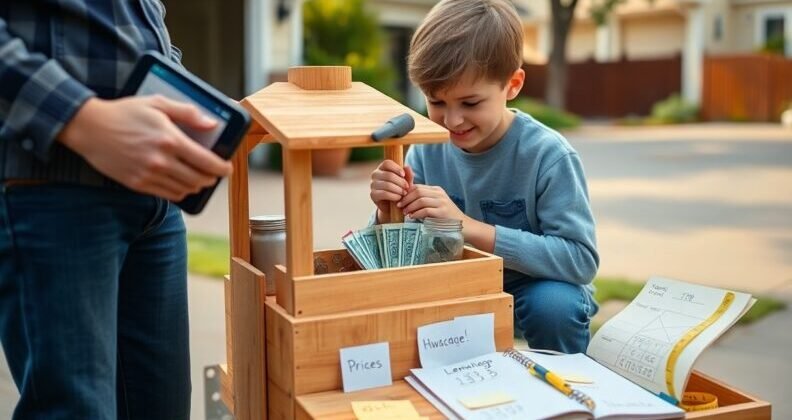

The best first business idea is usually one a young person can understand, test and complete with appropriate support. It does not need to be fashionable or capable of becoming a large company.
These ten possibilities are prompts for small prototypes. Costs, safety and suitability vary, so a responsible adult should check the actual plan before any real offer is made.
Ten ideas to test
- Handmade greeting cards. Begin with one design and check size, envelope fit, material cost and the time needed for a small batch.
- Original bookmarks. Test durability and readability with familiar users before choosing quantities or packaging.
- Decorative desk labels. Explore whether clear labels help a particular group organise materials more easily.
- A simple event display service. Within an adult-led organisation, prototype signs or a layout using approved information and clear limits.
- Original art prints. Make a test print, check rights and quality, then calculate the full cost of a small run.
- An adult-supervised skill-sharing session. Choose one manageable creative outcome, with the responsible adult handling safeguarding, participants and any payments.
- Notebook covers. Compare fit and material use, keeping the description honest about variation and durability.
- A planning resource. Design a paper organiser for a familiar task and test whether its layout makes the next action clearer.
- A club equipment system. With an organiser’s approval, develop labels and a return process. The first version may be a service project rather than a sale.
- Reworked decorative crafts. Use adult-checked materials and methods, avoiding specialist safety products and unsupported environmental claims.
Choose using four questions
Who would find it useful? What can we make or deliver reliably? What will the whole attempt require? What is the smallest test that would teach us something?
Use the answers to compare two ideas before committing. An exciting product that needs unfamiliar tools, expensive stock and unknown customer contact may be less suitable than a modest project close to home.
Keep the first cycle contained
Agree a time limit, a small spending boundary and a quantity that can be completed comfortably. Adults remain responsible for real accounts, payments, permissions, safety and applicable trading requirements. Use a mock sale when that better serves the learning.
Finish by comparing the plan with the result and asking what the learner would change. They may choose to continue, try a different role or stop. Our parent’s guide offers a simple first-week sequence for turning one of these possibilities into a manageable learning experience.