
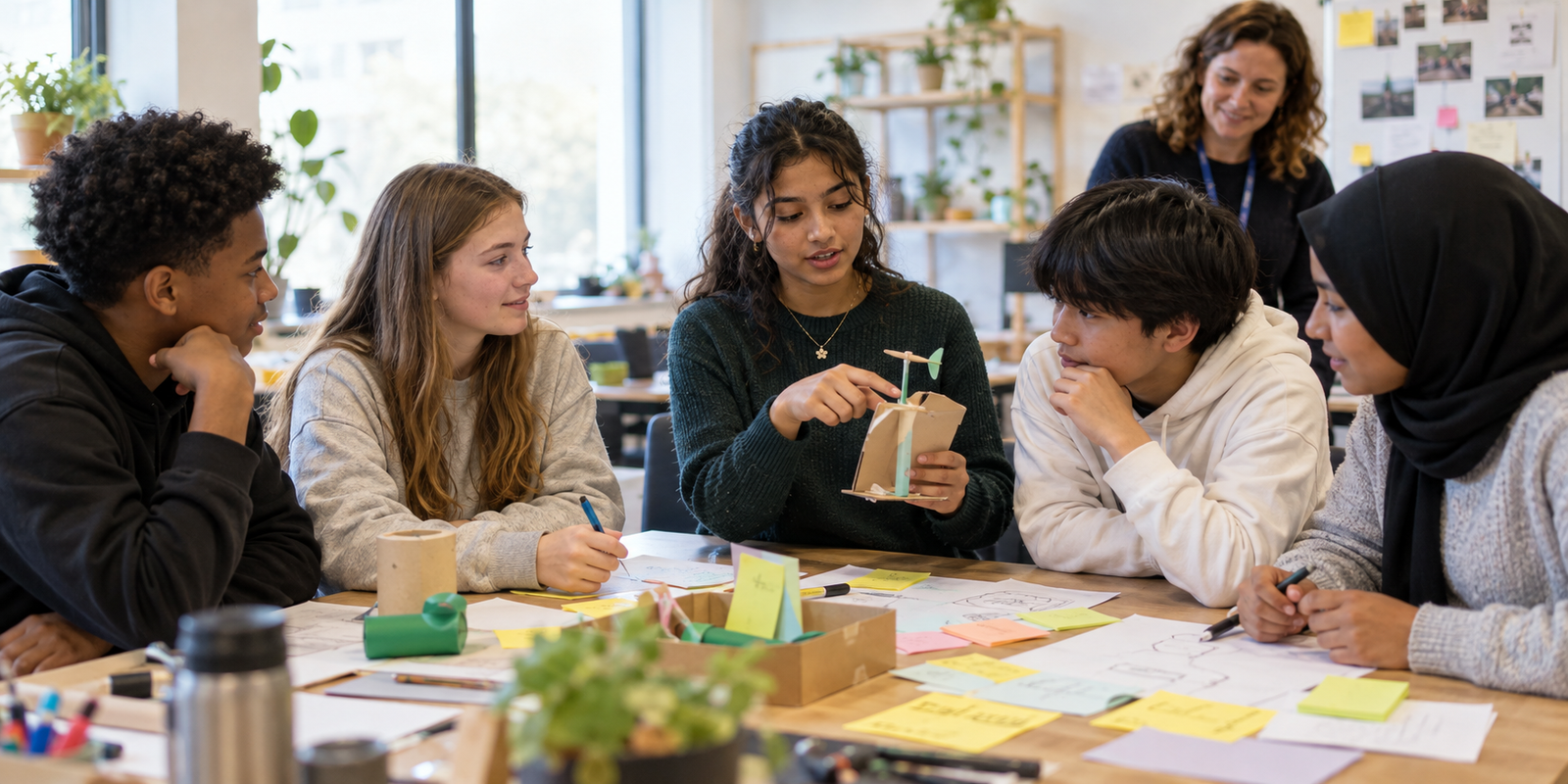
Imagine giving a group of teenagers £50 and challenging them to turn it into a small business.
Within minutes, someone’s suggesting a clothing brand. Another thinks customised phone cases would sell better. Someone else has a brilliant idea for an app, although nobody’s quite sure how they’re going to build it.
Then comes the question that changes everything.
“How much is all this going to cost?”
Suddenly, the conversation becomes a lot more interesting.
This is what makes youth entrepreneurship camps different from simply learning about business. Young people aren’t just discussing ideas. They’re discovering what happens when those ideas meet reality.
When a good idea isn’t quite enough
Let’s say the group settles on designing and selling T-shirts. They’ve agreed on a name, sketched out a logo and decided that £15 sounds like a reasonable selling price.
With a little research, they discover that producing each shirt will cost £9. Their £50 budget would cover five shirts, leaving £5 for everything else.
Six pounds gross profit per shirt sounds promising. Except they haven’t accounted for packaging, delivery or the possibility that nobody buys one. What happens if only two shirts sell?
Now revenue, costs, profit and risk are no longer abstract terms from a textbook. They’re questions the group has to work through before spending money.
The quiet one might have the best idea
Enterprise activities have a way of challenging expectations.
The most confident person in a group isn’t necessarily the best leader. Someone who rarely volunteers to speak might turn out to be excellent at spotting problems, organising tasks or finding creative solutions.
Think about the different roles involved in launching even a simple product. Someone needs to research the market. Someone needs to manage the money. Others might be better suited to design, promotion or speaking to customers.
There isn’t one personality type that makes a good entrepreneur.
One of the most valuable lessons is discovering that a successful team needs different strengths. Young people begin to understand what they bring to a group and where they might need someone else’s help.
What happens when nobody buys?
Perhaps the most interesting part of an enterprise challenge comes when things go wrong.
The group has spent ages designing its product. Everyone loves it. But when they ask potential customers, the response is underwhelming.
It’s disappointing, naturally. Yet there’s an important difference between an idea failing and the people behind it failing.
Maybe the product is too expensive. Perhaps they’re targeting the wrong audience. Or maybe they’ve created something they personally like without checking whether anybody actually needs it.
Testing assumptions, listening to feedback and changing direction are all part of the process. It’s where resilience becomes something young people practise rather than something they’re simply told to have.
Seven skills hidden inside one challenge
Look closely at the decisions the group has made and you’ll find several skills developing together:
- CreativitySeeing a problem and imagining a different solution.
- Financial literacyUnderstanding costs, pricing, revenue and profit.
- CommunicationExplaining ideas and listening to feedback.
- TeamworkSharing responsibilities and working through disagreements.
- Problem-solvingFinding alternatives when the first plan doesn’t work.
- PlanningOrganising tasks, resources and deadlines.
- ResilienceLearning from setbacks and having another go.
What’s useful is how naturally these skills overlap. A discussion about pricing can involve negotiation and financial judgement. A delayed launch can test planning and problem-solving. Presenting to customers builds confidence while helping young people understand what others value.
Does everyone need to become an entrepreneur?
Not at all.
The teenager who enjoys designing T-shirts might eventually pursue graphic design. Another could discover an interest in finance. Someone who enjoys organising everyone might find they’re a natural project manager.
And the young person whose first idea didn’t work? They may have learned something equally valuable about adapting when circumstances change.
That’s the wider purpose of enterprise education. It’s not necessarily about producing the next generation of business owners. It’s about helping young people become more capable when there isn’t an obvious answer.
The £50 challenge described here is an illustrative example, not a report of an actual Nu FOCUS camp.