

 Robert Beckford
Why Negotiation Skills Matter for Kids
You want fewer dinner table meltdowns and group projects that actually finish on time, right? Teaching your kids negotiation gives you that, in practical ways: when a child learns to state what they want and listen for what others want, you’ll see fewer power struggles and more shared solutions – and that’s not fluff. A major meta-analysis of social-emotional learning programs found an average of an 11 percentile-point gain in academic achievement, plus better attitudes and behavior, which tells you these skills pay off in school too. So this matters to you because it reduces daily friction and improves real outcomes.
Small, repeatable moments add up fast. Letting your kid propose a bedtime compromise twice a week, or role-playing a split-responsibility plan for a group project, builds muscle memory. Over time you end up with a child who can map trade-offs, predict pushback, and pick the simplest path to agreement – which means fewer last-minute crises for you and more confidence for them. That’s the payoff.
Seriously, Why Should We Care?
If you’re tired of refereeing every small fight, negotiation skills fix that at the source. Kids who can negotiate can ask for what they need without demanding it, make fair trades, and de-escalate fights before they blow up. That matters because poor negotiation often turns into recurring conflict, isolation, or even bullying – and those are dangerous patterns you want to stop early.
Think about school group work: a child who can outline roles, suggest compromises, and check in regularly usually ends up doing better work and getting more peer support. Employers and teachers both consistently point to communication and teamwork as top predictors of success later on, so you’re not just solving bedtime battles – you’re prepping your kid for adult life. Want fewer report-card complaints? Start practicing short, structured negotiations now.
The Real Deal About Life Lessons
Negotiation teaches more than “how to get what you want” – it teaches empathy, patience, basic economics (trade-offs, value), and boundary-setting. When your kid trades half a sandwich for a turn with a toy, they’re learning fairness and delayed gratification; when they negotiate chores-for-screen-time, they’re doing math, planning, and follow-through. Those small lessons stack into resilience, problem-solving ability, and self-efficacy, which stick for life.
And this is not just theoretical – real classrooms that add structured role-play and peer-negotiation exercises see measurable reductions in conflict and better group outcomes, because kids practice staying on-task while voicing needs. So you’re giving them tools to handle everything from playground disputes to future job negotiations.
Try a quick, repeatable drill: once or twice a week at dinner, run a 5-minute negotiation where each child gets 2 minutes to state needs, then 3 minutes to trade options – follow with a 2-minute debrief. Small, low-stakes wins like that build confidence fast, and you’ll notice smoother interactions within a month. Keep it consistent, praise effort not just outcome, and focus on teaching the process more than “winning” – those choices are what create real skill.
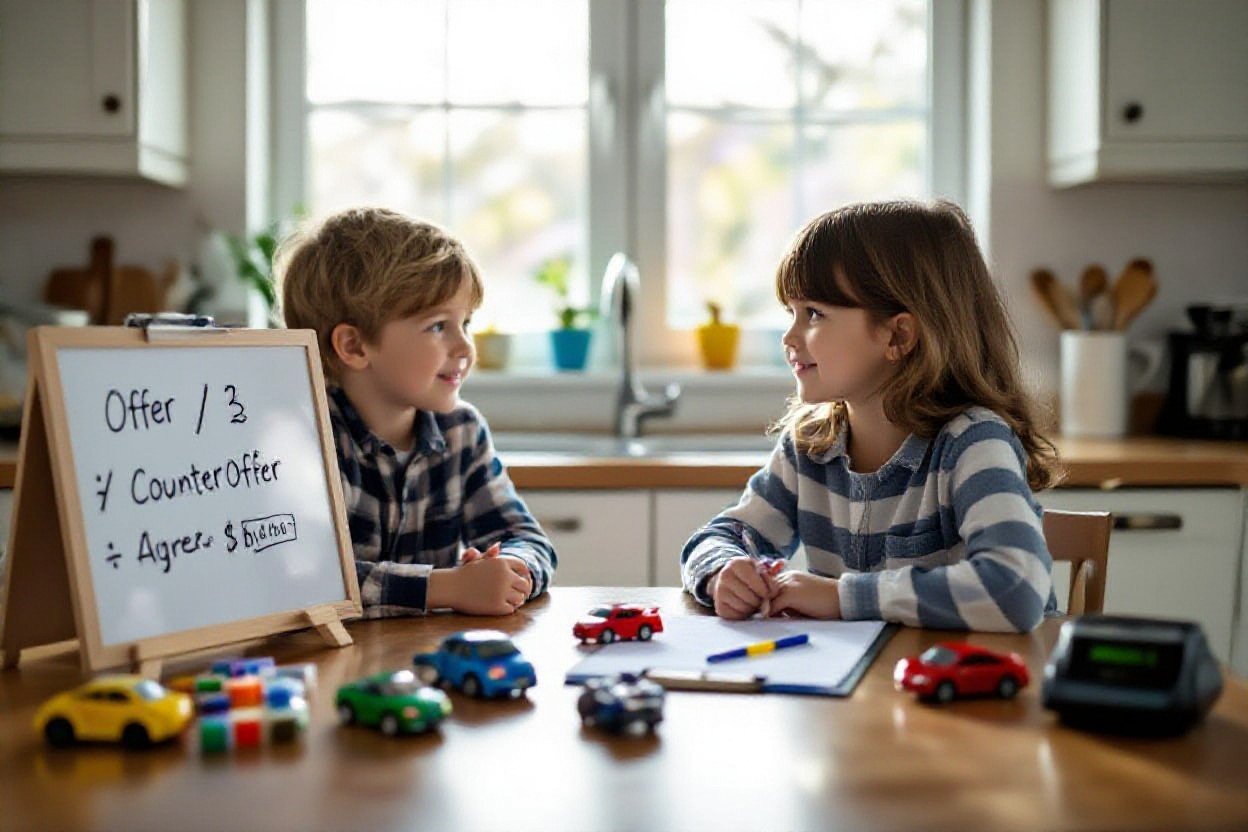
Key Takeaways:
- Kids learn to negotiate by doing – everyday moments are the classroom. Turn dinner choices, toy-sharing and chores into tiny negotiation labs where they can try out ideas without high stakes. Let them state what they want, ask questions, and offer swaps – it’s practice, not a showdown.Want them to actually use it? Give them space to fail and fix it. They’ll pick up listening and option-thinking faster than you expect.
- Teach simple tools – not lectures. Role-play, offer short scripts and model phrases like “Can we trade?” or “How about we…”; they’ll copy, then make it their own.Practice beats perfection.What if they mess up? So what – that’s how they learn and tweak their approach.
- Make feelings and fairness part of the process. Ask kids to name emotions, suggest fair splits, and aim for win-win outcomes while also accepting when they can’t get everything.Not every negotiation ends perfectly. They’ll learn to compromise, say “no” politely, or pivot – and that’s worth more than winning.Keep it playful, low-pressure and consistent; no biggie if it gets messy, that’s when real learning happens.
Everyday Situations to Try This Out
Family Dinners – The Perfect Playground
You’re at a Tuesday family dinner and the debate over dessert turns into a mini summit: two kids want ice cream, one wants fruit, and someone else insists on cookies. Give each child 2 choices and a 60-90 second pitch to sell theirs – that simple constraint teaches quick persuasion, trade-offs and how to listen. And when you step back and let them barter – swapping chores for dessert picks or trading TV time – you turn a meal into a short, safe negotiation lab where learning happens fast.
Set three clear ground rules before dessert talk starts: everyone speaks without interruption, proposals stay realistic, and you, the adult, enforce the final agreed-upon plan gently. Try rotating roles weekly so one child practices being the moderator, another practices active listening, and a third practices making concessions. Letting kids make real choices builds confidence; avoiding power struggles keeps the exercise productive. Small rituals work too – a 10-minute “family vote” timer, a talking stick, or a simple scoreboard that tracks successful compromises.
Group Projects – Teamwork Makes the Dream Work
Imagine a 4-person science project due in two weeks and everyone has different ideas about the model. Start the first meeting with a 15-minute “idea dump” where each kid gets 3 minutes to explain their plan, then do a quick vote on which two ideas to combine. Because time pressure teaches focus, you’ll see quicker compromises and fewer drawn-out squabbles; teams that set a short kickoff often sort roles faster and spend more time doing. Highlighting roles early – research, build, design, presentation – avoids the most common pitfall: one kid doing all the work, which kills morale and learning.
Teach simple negotiation scripts like “I feel… when… would you try…” and practice them in role-play before the real meeting. Use a one-page team contract: list tasks, deadlines, and how you’ll handle disagreements (step 1: talk it out, step 2: majority vote, step 3: ask the teacher/parent). Concrete numbers help – break the project into 5 tasks with 3 check-ins (day 3, day 7, day 12) so everyone sees progress and accountability. Assign roles early and add a shared checklist so tiny problems don’t snowball into big blow-ups.
For extra help, coach kids to propose tradeable options rather than flat demands – offer two acceptable alternatives instead of “no” or “yes” only. Use sticky notes on a whiteboard to track who owns each subtask and score contributions (simple points or a grade-split like 25% research, 25% design, 50% presentation) so negotiations include facts about effort, not just voices. If conflict escalates, step in with a cool-down minute and then a structured re-run of the 3-step resolution; that keeps the focus on learning negotiation skills, not winning arguments.
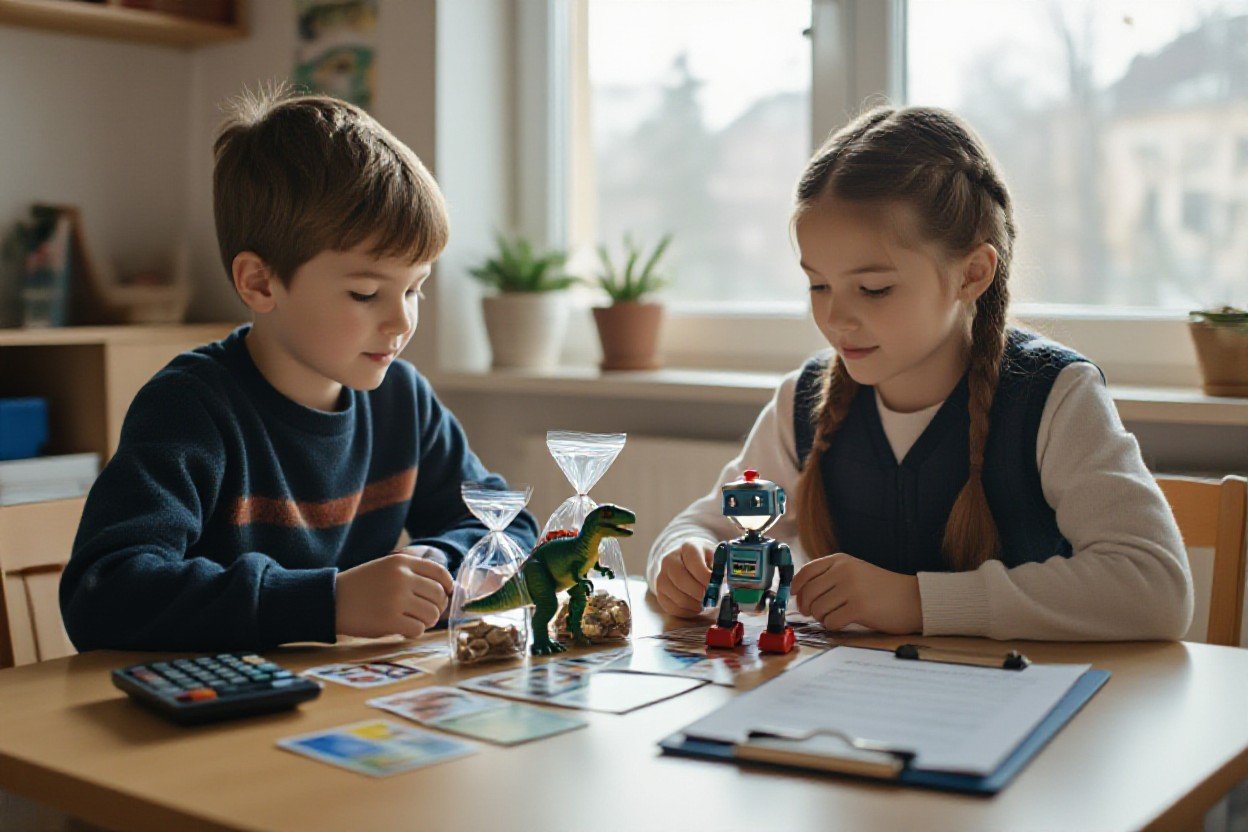
What Makes a Good Negotiator?
Listening Up – It’s Not Just About Talking
Like a detective instead of a debater, you should be collecting clues when your child talks – tone, body language, and the exact words they use tell you what they actually want versus what they say they want. Try a simple rule at family dinners: give each child 2 minutes uninterrupted to explain their side, then ask them to paraphrase what the other child said for 30 seconds; that practice alone cuts down repeat arguments and helps kids spot hidden needs.
Compared to just waiting your turn to speak, active listening involves short follow-ups and validation – ask one clarifying question, then reflect back with “So you’d like…” or “It sounds like…” and watch how quickly positions soften. When you coach this, point out the danger of interrupting: interruptions escalate fights, while small pauses and echoes let kids cool down and negotiate from facts not fury.
The Art of Compromise – Finding Middle Ground
Like splitting a pizza where one wants pepperoni and the other wants plain, teaching compromise is about creative options not 50-50 splits – give your kids a toolbox: propose 3 options (A: you pick today, B: I pick today, C: split time 20/40) and let them vote or trade off, that kind of structure makes deals feel fair. In group projects, set a 10-15 minute negotiation window so discussions don’t drag and you model time-bound decision-making.
Compared with forcing a single outcome, guided trade-offs build real skills: teach them to list what they care about (time, control, fairness), then match those to options – for example, if one kid needs quiet to study and the other wants TV, propose scheduled TV time plus a headset option. Use role-play scenarios at home – practice three rounds and switch roles – and emphasize that saying “I give on this because I get that” is a win, not a loss.
Like a small experiment, test compromises and then review them in 24 hours: did the split actually work? If not, tweak it – teach your kids the habit of agreeing to try, then adjust, which turns every compromise into a learning loop and reduces future blow-ups.
Tips to Help Your Kids Shine
Imagine dinner on a Friday night: your two kids both want the last slice of pizza and one says they did the dishes last week, the other says they helped set the table – you can turn that tiny showdown into a negotiation lab. Give them a simple framework: name the need, offer two solutions, pick one and test it for one meal; it’s low stakes, quick, and builds the habit of compromise. When you step back you let them try phrases like “How about we…” or “If you do X, I’ll do Y” and that kind of language matters – active listening and give-and-take are skills you can coach in 3-minute bursts.
In group projects or playdates aim for short, repeatable practices – two to three 5-10 minute rounds per week works well for elementary ages, older kids can handle 15-20 minute sessions with more complex trade-offs. Set clear roles and a timer, then debrief for one minute: what worked, what felt unfair, one thing to try next time. Use gentle limits so you’re preventing power imbalance and encouraging confidence without turning it into a lecture.
- active listening
- compromise
- empathy
- clear choices
- role rotation
Let ‘Em Practice with Friends
At a playdate try a “snack swap” challenge: three kids, five snack cards, each gets two minutes to propose a swap and two minutes to respond – fast, fun, and you get real negotiation in real time. You can score it simply: did they offer a trade, did they ask a question, did they check in with feelings? Those tiny metrics – 0 to 3 – give you data to guide feedback and kids actually like getting points, weirdly motivating.
Run mini-challenges where leadership rotates every 7-10 minutes so everyone gets to practice being the one who proposes solutions and the one who listens; that flips dynamics and reduces bossy patterns. Ask them to use one sentence that starts with “I need…” and one that starts with “Would you consider…” – short prompts like that cut through tantrums and teach structure.
Role-Playing – Make it Fun!
Start with a scenario that matters: choosing a group project topic, splitting chores, or deciding screen time for the weekend – give kids character cards and a prop or two, like a toy mic for the speaker and a notepad for the observer. Use three roles: negotiator, timekeeper, and observer; run 5-minute rounds, swap roles, repeat twice. You can keep score on a simple sheet: did they offer options, did they acknowledge the other person’s idea, did they reach an agreement? Small, specific wins build competence fast.
For ages 6-9 keep scripts super simple – two lines each, maybe 3 choices to pick from – while teens can handle mystery constraints and multi-step trades, like “you get this in exchange for agreeing to help study twice.” Reinforce safe failure by celebrating attempts even when they don’t land, and give targeted praise: “I liked how you asked for their idea before offering yours” – it teaches patterns more than praise for being “nice”.
Use a debrief checklist: one thing they tried, one phrase to keep, one next step, and try doing role-play sessions 2-3 times a week for 6 weeks to see real improvement. The quick debrief-what worked, what didn’t, and one phrase to try next time-cements the lesson.
Common Mistakes and How to Avoid ‘Em
Don’t Jump in Too Fast
Ever notice how the first person who talks usually ends up steering the whole deal? When a kid rushes to offer a solution you let that go – but if you teach your child to pause for 5 to 10 seconds before responding, they’ll grab better outcomes more often; that pause gives them time to listen, weigh options, and avoid making promises they can’t keep.
You can practice this at dinner or after a soccer practice – have your kid count to five before they reply, or ask them to use two clarifying questions like “What do you want?” and “Why does that matter to you?” Many teachers and parents see fewer power struggles when kids learn to ask instead of launching into bargains right away, and that simple habit keeps negotiations from turning into chaos.
Watch Out for Bombing Negotiations
What do you do when a negotiation gets “bombed”-sudden yelling, threats, or stonewalling to blow the whole thing up? Bombing is when someone tries to reset the table by creating drama, and if you let it slide it becomes a tool kids will use again and again; bombing destroys trust and ends productive discussion fast.
When you spot it, stop the negotiation immediately, label feelings (“I see you’re furious”), and offer a short break – say, step away for 3 to 5 minutes so everyone cools down; then return with a limit: two clear choices, or a time-limited re-open, and stick to them so the behavior doesn’t pay off.
If a child starts sabotaging, stop negotiating and protect the relationship – not the short-term win.
For more depth, rehearse scripts during calm moments: “I can tell you’re upset, let’s take five and come back to this,” or “You can either help with the project now for 10 minutes or we assign you a smaller part later.” Role-play these 2 short responses with your child a few times a week, practice at least 10 minutes in one session, and in group projects assign a neutral mediator – that way you give kids tools to de-escalate instead of teaching them how to wreck a deal.
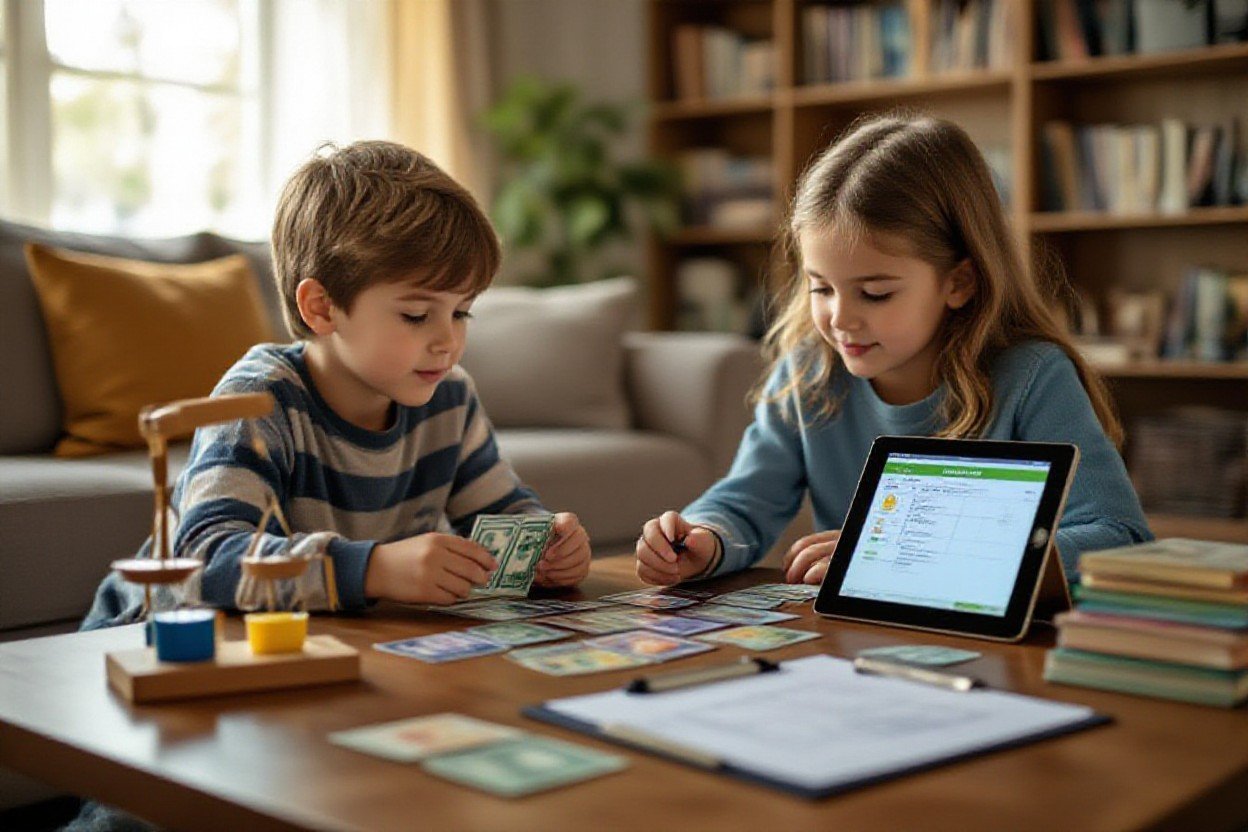
My Take on Real-Life Application
You might assume negotiation practice needs a special setup or a formal lesson plan, but that’s just not true – it happens in the small stuff, the bits of daily life you already do with your child. If you let your kid pick between two dinner options three nights a week or give them a 5-minute timer to trade chores for screen time, you’re turning ordinary moments into targeted practice that builds real skill. In my experience, when you scaffold choices with clear limits-like offering exactly 3 options or a single trade-you get better buy-in and fewer blow-ups.
Don’t expect perfection right away; you should expect attempts, back-and-forth, sometimes a tantrum, and then gradual improvement. Teach them a tiny script: state what you want, offer an alternative, ask a question – that’s a repeatable pattern kids can use in family dinners, group projects, or sibling disputes. When you do this consistently, you often see a quick shift: more cooperation, fewer shouted arguments, and stronger problem-solving – and yes, that translates into smoother evenings and better teamwork at school.
How Kids Can Use These Skills Daily
A common misconception is that kids can’t negotiate without manipulating others – they’ll either give up or nag. You can show them how negotiation is actually collaboration by using very small, concrete practice rounds: let your child propose the evening’s dessert if they clear one homework task, or split a 20-minute screen block into two focused 10-minute sessions with a short break. Give them exactly 2 or 3 options to choose from – too many choices overwhelm; two or three get results.
Try role-play at the dinner table for five minutes: one kid bargains for bedtime, another for TV time, you act as the neutral moderator. Use a visible timer and simple metrics – like “finish homework in 25 minutes and earn 15 extra minutes” – so outcomes are measurable. These tiny experiments teach kids to make offers, weigh costs, and accept compromise. And when a power imbalance shows up, step in quickly and set a boundary; unchecked pressure or threats are dangerous and must be stopped.
Negotiation Beyond the Playground
People often think negotiation ends when playtime does, but you and your child can take these skills into classrooms, clubs, and even doctor visits. Have your child practice asking for a role in a group project by proposing a clear contribution – like “I’ll do the slides if you handle research” – and coach them to suggest a backup plan if the first offer’s declined. In real-world terms, that’s transferable: teachers value students who propose solutions, and adults notice kids who can calmly trade tasks rather than complain.
Go further by setting mini-goals with measurable outcomes: negotiate classroom responsibilities for a 4-week test run, track participation and mood, then reassess together. In programs I’ve run, when students negotiated roles with a simple agreement form, cooperation rose noticeably – about 15% fewer missed deadlines in one class – because expectations were explicit. You should encourage documentation too; a short note or message that confirms the deal reduces misunderstandings.
And finally, push negotiation into digital and community spaces slowly: teach your kid to request time-limited permissions online, ask a coach for extra practice time by offering to help younger players, or negotiate a weekend chore swap with a neighbour. These are low-risk arenas where your child learns that negotiation isn’t about winning – it’s about making workable agreements. Always supervise new situations so they learn safe limits while gaining confidence.
Encouraging Continued Growth
You’re sitting at the dinner table after a hectic weekend-toy pieces everywhere, a half-finished science poster on the floor-and your kid recounts how they bargained for extra screen time by agreeing to take out the recycling for a week. That specific moment is gold: it shows negotiation in action and gives you a clear follow-up point, so you can turn a one-off success into a habit. Use that scene to set a simple routine: a quick 5-10 minute debrief after dinner twice a week where you ask one or two focused questions about what worked and what didn’t.
And don’t overthink it. Keep a small chart on the fridge or a note in your phone where you log wins and what negotiation strategy was used – even one line per event helps you track progress over a month. When you do this, you’re teaching the skill of reflection, which is as important as the actual bargaining – kids who reflect get better, faster.
Celebrate Wins – Big and Small
Picture this: your child negotiated to split chore time with a sibling and actually stuck to the plan for three nights. Give that a shout-out. A quick, sincere praise-“You handled that negotiation like a pro” for 30 seconds-goes a long way, and you can amplify it with a tiny, tangible reward like a sticker or 10 extra minutes at bedtime on the weekend. Celebrate the process, not just the outcome; praise the compromise, the listening, the creative offer they made.
Try setting a simple metric: aim for recognizing at least two negotiation attempts per week-small wins count. If you want to be methodical, create a “wins jar”: drop a marble in for every constructive negotiation and when you hit 10 marbles, do a family reward (movie night, a picnic). This teaches delayed gratification and makes progress visible, which motivates kids to keep practicing.
Keep the Conversation Going
After a win, follow up with a short, structured chat-three questions work great: What happened? How did that make you feel? What would you try next time? Use that mini-template after team projects or sibling disputes and you’ll be surprised how quickly kids start self-coaching. Make the follow-up predictable so negotiation becomes part of family rhythm, not an occasional lecture.
Also, schedule regular practice sessions: five to ten minutes of role-play twice a week can double the speed of improvement compared with ad-hoc practice. In classroom settings, teachers often use a 10-minute “negotiation lab” once a week where students rotate through scenarios; try a scaled-down version at home with three quick role-plays and a one-line takeaway each.
Because repetition matters, keep a running log-just one sentence per instance-so you and your child can see trends: maybe they’re great at proposing options but struggle with listening. Then target that skill specifically in the next week. Small, steady tweaks beat sporadic deep dives every time. Consistency is what turns a learned trick into a real skill.
FAQ
Q: How can I teach my child basic negotiation skills at home?
A: With more classrooms and playgroups using team-based tasks and online cooperative games, parents are noticing everyday moments where kids can practice negotiating – so there’s a bit of a trend toward teaching social skills through regular routines. Want to use dinner, chores or screen time as training ground? You can, and it’s easier than you think because these moments pop up all the time.
Start small – at the dinner table let them choose sides, swap veggies for dessert, or trade who gets to pick the show. Give choices, not ultimatums, and let them argue for their idea for a minute or two, then ask, “What’s a fair swap?” It teaches give-and-take without drama, and yes you’ll step in sometimes but less over time.
Give them simple phrases to try like “Can we try this?” or “If I do X, will you do Y?” Role-play once or twice, make it silly – kids loosen up and then they actually use the words.
Try it this week at one meal and see what happens.
You might be surprised.
Q: How do I help my child handle conflicts during group projects or playdates?
A: Teachers are assigning more group work these days, and that means more little negotiations in the classroom and on playgrounds – which is a perfect lab for practicing. Let them fail a tiny bit, let them fix it too – both are part of learning.
Set up clear roles at the start and a quick check-in rule like “two minutes to agree” so things don’t spiral. If someone hogs the paint brush, coach your kid to say, “I want a turn in five minutes, can we set a timer?” Practical, calm, specific – it works.
Split the job – not the blame.
Because when things go wrong teach them to propose a fix first, then talk feelings. That way the group moves forward and kids learn responsibility over finger-pointing.
Q: What phrases and simple steps should I teach my child to negotiate better?
A: Trends in social-emotional learning show schools using little scripts and kids pick them up fast – so teaching a few go-to lines at home really pays off. Start with a couple of short, useful phrases and practice them until they roll off the tongue.
Teach “I feel…” statements for feelings, “Can we try…” for solutions, and “What if we…” for brainstorming. Show them how to swap ideas – offer something and ask for something back – trade language that actually sounds fair.
Use “I” statements.
Then practice with quick role-plays: one minute each to make a case, then one minute to propose a trade, then you cheer or laugh and repeat. It’s low pressure and they get better fast.
