

 Robert Beckford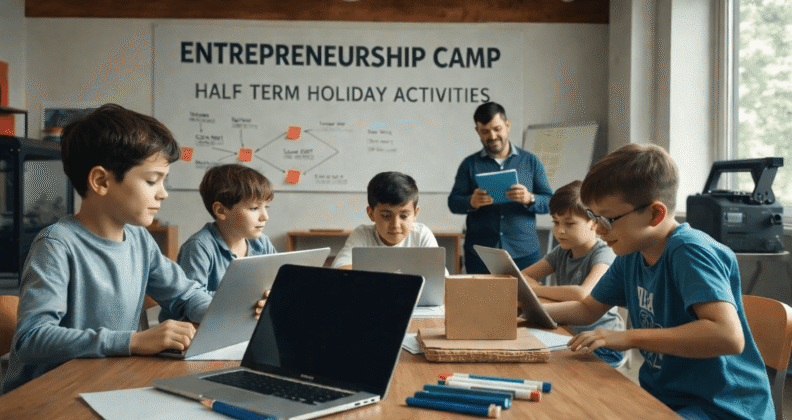
A lot of parents view entrepreneur camps for kids aged 10-16 as hands-on routes for children to gain confidence and practical business skills and you should too. Camp projects, mini-markets, pitching and budgeting teach teamwork and expose potential online safety risks, getting them thinking strategically from early. As well as a good camp experience, you should see lasting gains in understanding, creativity and clarity in career / business readiness.
Key Takeaways:
- Entrepreneur camps give kids practical chances to lead projects, present ideas and make group decisions. Some camps culminate with a kids business fair, where you’ll find 13-year-old’s leading a mini-market stall and fielding customer questions, which in turn improves vocal communication. Nothing beats good practical experience.
- Hands-on leadership: this is to build self-belief and decision-making that can easily transfer to school, clubs and eventually part-time work.
- Steps: start with small roles, set clear responsibilities, schedule mentor feedback.
- Challenge: public pitching can feel scary for quieter children.
- Safeguards: small groups, trained staff and structured debriefs with parents are all positive signs of a good camp.
- Camps teach budgeting, pricing, marketing and simple bookkeeping through real projects rather than worksheets. They may work in a team to create a product / service where they’ll be asked to tracked costs, set prices and record profits to see the effects of choices.
- Early, practical money lessons help teens make informed GCSE/A‑level or apprenticeship choices and improve financial confidence.
- Steps: use age-appropriate budget templates, run quick cost-profit checks, review with an adult.
- Challenge: financial detail can overwhelm younger campers.
- Safeguards: short finance sessions, plain-language examples and parental oversight.
- Worthy camps should encourage creative problem-solving by asking kids to spot everyday issues and design original solutions. For example, one of our groups sketched an app to help students swap revision notes, ran a simple survey and adapted their idea from feedback. This kind of creativity can be transferred to areas such as exam revision and in turn project work which shows initiative on CVs or college forms.
- Steps: camps should run ideation sprints, prototype quickly and collect user feedback.
- Challenge: many ideas may not be practical at first but camps should be safe spaces for children to explore.
- Safeguards: facilitators on camps must guide idea screening, tease out feasibility checks and instil respectful feedback rules for the group.
- At an enterprise / business camp, working in teams is essential to build communication skills, pitching ability and to gain experience of collaborating with different personalities. Social skills and early networks increase confidence and can lead to collaborations, work experience or apprenticeships.
- Steps: camp workshops use icebreakers, rotate roles and practise short pitches.
- Challenge: there will always be louder voices they can dominate group work, at a camps children learn the skills needed to negotiate these characters.
- Safeguards: this needs firm facilitator-led turn-taking, mediator support and clear reporting for concerns.
- Enterprise camps are a good early exposure to business for teens to open up their eyes to career options and improve social mobility by making routes like apprenticeships or small start-ups more tangible. Concrete experience helps young people choose courses and careers with more confidence and realistic expectations.
- Steps: our camps link campers to local firms and mentors and we hold briefings in workshop style to outline next steps (courses, clubs, work experience).
- Challenge: programmes that promise quick success can create pressure, so be sure that .
- Safeguards: ensure realistic outcomes are set, there is the provision of impartial career information and mentors keep parents involved.
Cultivating Innovation
Camp sessions should push your child to test ideas through playful experiments and guided feedback, so they practise innovation and learn from safe failure. Hands-on challenges encourage original thinking while keeping risks controlled, giving you confidence that creativity grows alongside practical skills.
Fostering Creative Thinking
You should start to see your child experiment with quick projects, perhaps designing a mini-app or a pop-up stall that demonstrates they are nurturing bold ideas and creative risk. These tasks teach idea testing, rapid iteration and practical imagination, so you get visible progress that leads to improved confidence and even schoolwork.
Encouraging Problem-Solving Skills
Practical challenges place your child against real-world problems, prompting steps like research, prototyping and testing so they develop systematic problem-solving and resilience.
Team tasks force your child to propose, test and refine solutions under time pressure, making collaborative problem-solving tangible and teaching responsibility. You will notice better planning and clearer arguments in homework and pitches.
Mentors guide reflection after each challenge, showing you how feedback turns mistakes into growth and reinforcing structured approaches that your child can apply to exams or everyday issues.
Building Leadership Qualities
Camp projects give them real chances to practise decision-making and take on responsibility, helping them grow into a leader who listens and directs.
Running group tasks, like pitching and mini-market days, teaches them to handle pressure, accept mistakes and celebrate small wins.
Developing Communication Skills
Practice in pitching and peer feedback improves how they present ideas and listen, sharpening both confidence and clarity.
Teamwork and Collaboration
Working in teams demonstrates how roles fit together, so they can share tasks, resolve conflict and reach a shared goal.
Group challenges push you to trust peers, accept feedback and build practical skills like budgeting and selling.
Beyond project work, you practise negotiation, divide responsibilities and learn to give fair credit-skills that make teamwork safer and more effective.
Understanding Financial Literacy
They’ll discover how money flows-earnings, spending, saving, debt-and how choices shape outcomes; camps teach budgeting and saving through games and mini-markets.
Camps give hands-on practice with real tasks so they can spot risky scams versus safe options, practise small trade-offs and get guided feedback on decisions.
Basics of Budgeting
Simple tools like jars, spreadsheets and short challenges show them how to plan spending, track income and set savings goals before committing to projects.
Introduction to Investments
Starting with low-risk options such as savings accounts, cash ISAs and micro-investments; camp sessions explain compound interest and how time affects returns and risk.
Small simulations let them try short trades and long-term plans, test simple diversification, spot volatility and practice risk checks with mentor supervision.
Hands-On Experience
Applying budgeting, marketing and product design at a camp, helps them to gain practical skills through project-based learning. Low-stakes risk-taking lets them test ideas in a safe, supervised setting where mistakes become useful lessons.
Our teams run a mini-market day, so your child practices pricing, pitching and customer service with real customers; that converts theory into visible confidence and clear skills.
Real-World Business Simulations
Simulations place your child in scenarios where choices carry real consequences while mentors supervise; an example is running a pop-up stall with budgets and competitors, which speeds learning and sharpens judgement as they iterate.
Networking Opportunities
Peers at camp become immediate collaborators, so your child practices pitching, negotiation and teamwork in short, supported projects; that interaction builds communication skills and often leads to lasting collaborations.
Sessions with guest mentors and local entrepreneurs expose your child to adult perspectives and potential contacts in Bedford’s community, teaching professional courtesy and broadening future thinking.
Connections made at camp can turn into school enterprise partners, summer ventures or mentor relationships that provide ongoing advice and practical support long after the programme ends.
Boosting Confidence
Camp activities push them to lead projects, practice public speaking and make decisions; e.g., running a mini-market day gives them a sense of real responsibility; the result is boosted confidence that carries into school and friendships.
They take ownership of tasks, get feedback from peers and instructors and learn that small wins matter; for example, a successful pitch creates a sense of accomplishment in a safe, encouraging setting.
Overcoming Challenges
Facing setbacks at camp trains kids to adapt, problem-solve with a team and accept constructive critique; a failed prototype becomes a learning moment, building resilience and practical coping skills you use beyond camp.
Presenting Ideas Effectively
Practising short pitches helps to clarify ideas, choose strong examples and use simple language; role-play presentations at camp give immediate feedback, sharpening your communication under pressure.
Clear openings, bold visuals and timed rehearsals teach how to hold attention; try a 30-second hook, a single bold benefit and a demo to make complex ideas feel tangible and persuasive.
Exposure to Diverse Career Paths
Exposure gives your child a broader view of roles across sectors, helping them match interests to real jobs. Camps let children test alternatives through projects and short challenges, so your child gains early clarity about possible futures.
Exploration of Different Industries
Industry tasters put your child into tech, retail, social enterprise and creative tasks so they can see what resonates. They’ll notice which activities spark engagement and which skillsets they enjoy using, offering clear signals about where they might excel.
Guest Speakers and Mentors
Professionals from local businesses and startups share stories that deliver real-world insight, showing practical routes into different careers. You and your child collect concrete examples of day-to-day choices and career steps.
Mentors give targeted feedback on projects, help refine ideas and can become future contacts; this is important as we all have tunnel-vision but with a mentor they can watch for biased or narrow viewpoints and ensure advice comes with adult oversight and safe follow-up opportunities.
Final Words
Drawing this all together, you can see how an entrepreneur camp builds practical business skills, confidence and money sense for 10-16-year-olds. Hands-on examples, such as running mini-market’s teaches budgeting, marketing and pitching. Children learn from teamwork, better financial awareness and leadership that they can use in school and future choices.
- Steps: choose a local camp with age-appropriate projects and clear staff ratios.
- Challenges: expect nerves and time pressure; plan short tasks to help your child adapt.
- Safeguards: ask for DBS-checked staff, a written behaviour policy and regular parent updates.
